
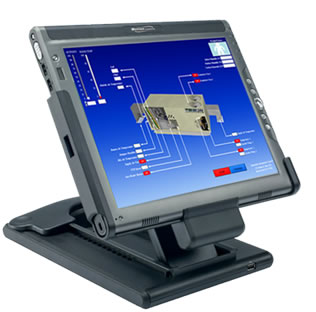
 Fortune Group Wll Control Systems is a software engineering firm specializing in the development of SCADA (supervisory Control and Data Acquisition) and HMI (Human Machine Interface) data visualization solutions for manufacturing, power and utilities and other industrial verticals.
What is SCADA?
Supervisory Control and Data Acquisition (SCADA) is an acronym for industrial automation software that monitors industrial processes such as operation, manufacturing and building management. This data is then monitored through the Human Machine Interface (HMI) to end users in graphical form so they can control and monitor the SCADA system as needed.
Why BIB-SCADA?
Our in-house expertise and experience has provided us the opportunity to partner with companies from various markets, and assist them in developing custom Scada solutions that meet their specific needs. Our goal is to help our clients transfer their real-time production and operational data into actionable information through graphically-compelling, functional, and intuitive user interfaces. Using BIB-SCADA products, our customers improve productivity and safety while reducing downtime.

Supervisory Control and Data Acquisition (SCADA) Systems are frequently used in Water and Waste Water Systems to monitor and control tank levels, remote well pumps, lift station pumps, high service pumps, valves, and chemical pumps.
SCADA Systems monitor a variety of plant data including flows, motor currents, temperatures, water levels, voltages, and pressures. Alarms at central or remote sites triggered by any abnormal conditions are propagated to the HMI computer for operator's attention. In addition to alarms, important plant information such as, levels, flows, pressure will be logged in the HMI computer database for reports and trends.
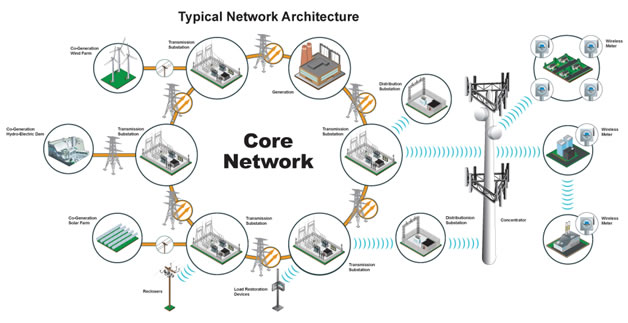
We commission active remote telemetry sites monitoring and controlling equipment via radio, telephone, and cellular systems. We manufacture a complete line of RTU's, CTU's, and control components. We handle the complete system: from the central computer and software to the pump controls and treatment plants.
There are a number of advantages to having a SCADA system installed such as:
• Ability to significantly reduce operating costs, while improving system performance and reliability
• Costly after-hours alarm call-outs can often be avoided since a SCADA system will indicate the nature and degree of a problem
• Since data is continuously recorded, operators do not have to manually read and record meter readings on a daily basis.
• Operators do not have to keep track of hundreds of log sheets as any data recorded on the SCADA system can be downloaded and accessed at their convenience.
• SCADA systems can often be accessed remotely through an internet connect on your office computer or laptop, and even your cell phone or tablet.
The SCADA Communication network is spread throughout the water distribution system to monitor parameters such as tank levels and system pressure. Workstations, which are typically PC-based and located in a control or operations room at a treatment plant, allow operators to view the entire process and perform actions.
Within the plant, process controllers or programmable logic controllers (PLC's) supervise unit processes, such as chemical treatment, sedimentation, and filtration. A local area network (LAN), such as Ethernet, links the controllers to the workstations as well as to one another.
Waste Water Treatment
Sewage treatment is the process of removing contaminants from wastewater and household sewage, both runoff (effluents), domestic, commercial and institutional. It includes physical, chemical, and biological processes to remove physical, chemical and biological contaminants. Its objective is to produce an environmentally safe fluid waste stream (or treated effluent) and a solid waste (or treated sludge) suitable for disposal or reuse (usually as farm fertilizer). Using advanced technology it is now possible to re-use sewage effluent for drinking water.
Pumping Station
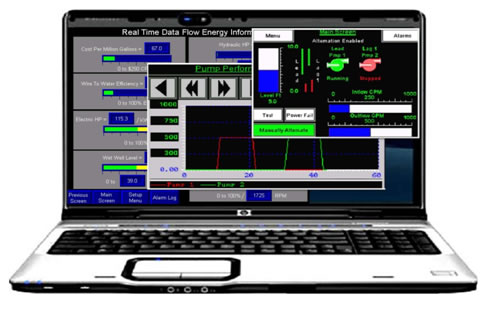
Graphical display screens indicating status of pump stations. A pump station screen typically show the instantaneous station flow, wet well level for waste water pump stations, pump run times, pump starts, pump status such as running, failed, off, forced on and forced off, pump start position, power status, generator status etc.